
Jul 1, 2026
PKM users are asking for local-first notes that keep structure, context, and ownership
The strongest current 1AiVault signal is not another generic memory feature; it is durable, owned context. A self-hosted notes thread compares Affine, Obsidian, Outline, Docmost, and Plumio through the lens of lock-in, sync,...
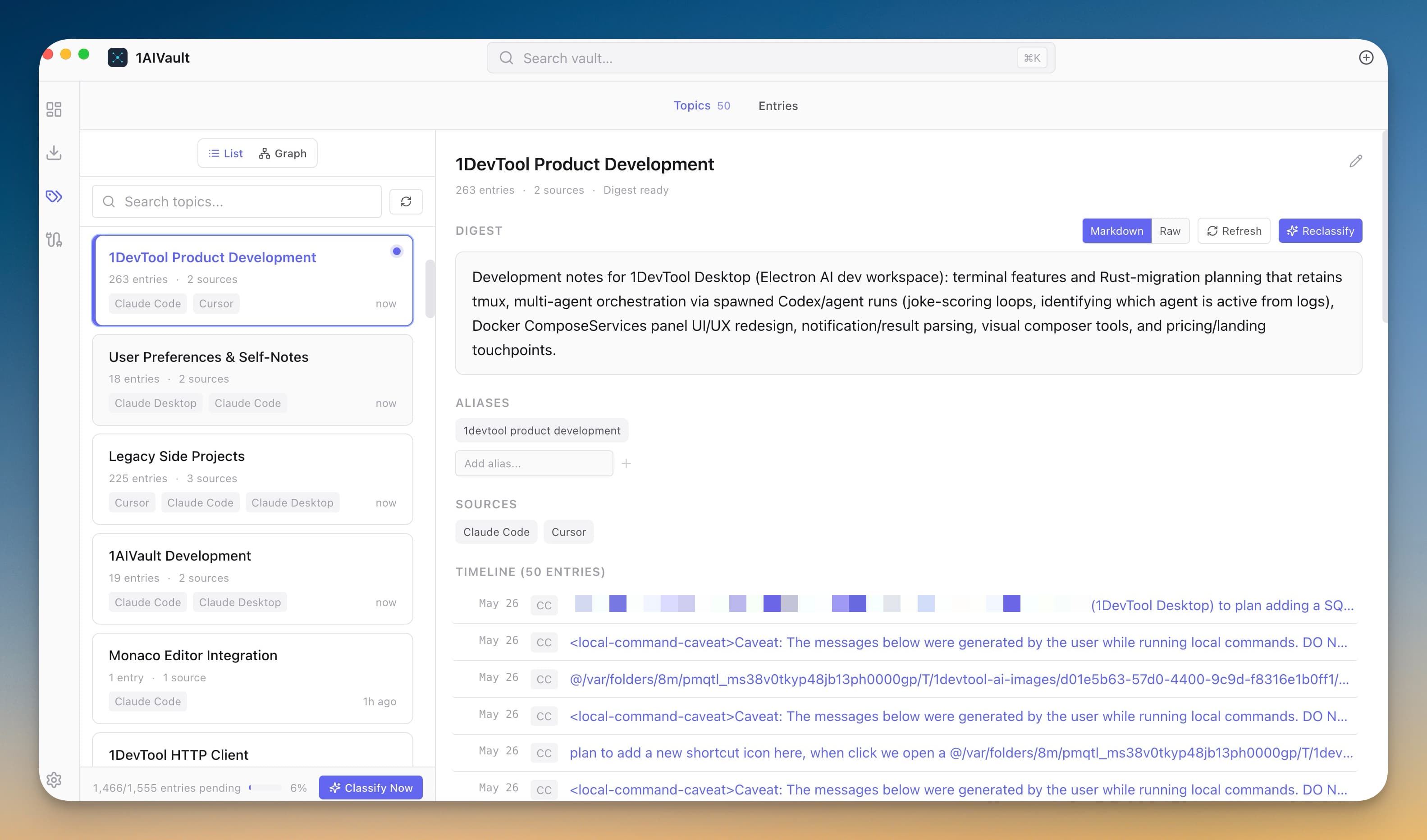
AI memory is becoming less about saving chat transcripts and more about keeping work usable after the chat window closes. The valuable material is not the conversation itself. It is the decisions, constraints, source links, critique habits, project facts, and next actions that should survive into the next tool.
The signal came from selfhosted, ObsidianMD, PKMS, PKMS discussions. The pattern is clear: people are trying to turn ai memory, pkm, obsidian, and local first into a durable layer they own. They do not want another opaque cloud notebook that only works inside one assistant. They want local AI memory that can be searched, reviewed, exported, and reused.
Local Ai Memory Needs Structure, Not Just Storage
A pile of saved conversations is not memory. It is an archive. Memory starts when context can be retrieved for a reason: this project, this decision, this document, this recurring instruction, this warning from last time.
That means the memory layer has to preserve shape. Markdown, local databases, source links, tags, attachments, and project boundaries matter because they let the user inspect why a piece of context was brought back. Without that structure, retrieval becomes another form of model intuition.
The Useful Context Is Often Outside The Chat
Artistic_Cycle_6778 compares self-hosted notes apps and calls out feature lock-in, paid sync, ugly UI, and too many moving parts.
This is why AI memory keeps converging with notes, project databases, documents, and local knowledge bases. The chat is where work happens for a while, but the source of truth is broader. It includes files, notes, plans, tickets, prompts, and decisions that existed before the model entered the workflow.
A serious memory system should meet the user there. It should import and connect context from the places where work already lives instead of asking every project to become a single endless conversation.
Ownership Is A Practical Feature
Portability sounds philosophical until a model changes, a product limit appears, an account gets locked, or a workspace migration begins. Then ownership becomes operational. Users need to know they can export the memory, inspect it, back it up, and bring it to another assistant.
Local-first design helps because it treats the user's context as the primary asset. The model is replaceable. The memory should not be.
Retrieval Has To Be Auditable
The next problem is trust. If an assistant uses old context, the user needs to know what it used and why. Was the answer based on a stale decision? Did it pull a note from the wrong project? Did it remember a preference that no longer applies?
Auditable memory keeps sources visible. It lets users delete, correct, pin, and narrow context. That control is what separates useful continuity from a model that vaguely claims to remember.
Personal Knowledge Becomes Operational Context
PKM tools taught people to capture notes. AI work is teaching them that capture is not enough. A note becomes more valuable when it can guide a future draft, constrain an agent, brief a new session, or remind the user why a decision was made.
That is the shift behind the current demand for local AI memory. The goal is not a larger archive. The goal is a context layer that turns personal knowledge into working memory. For a related framing, see Private AI Memory Is Becoming Operating Memory.
Chats will keep changing. The user's context should become more durable, more inspectable, and easier to carry every time they work.