
Jul 3, 2026
Contaminated Long Chats Need Memory Hygiene, Not More Scrolling
Contaminated Long Chats Need Memory Hygiene, Not More Scrolling explains why useful AI memory needs fast capture, visible boundaries, and reusable context rather than another transcript archive.
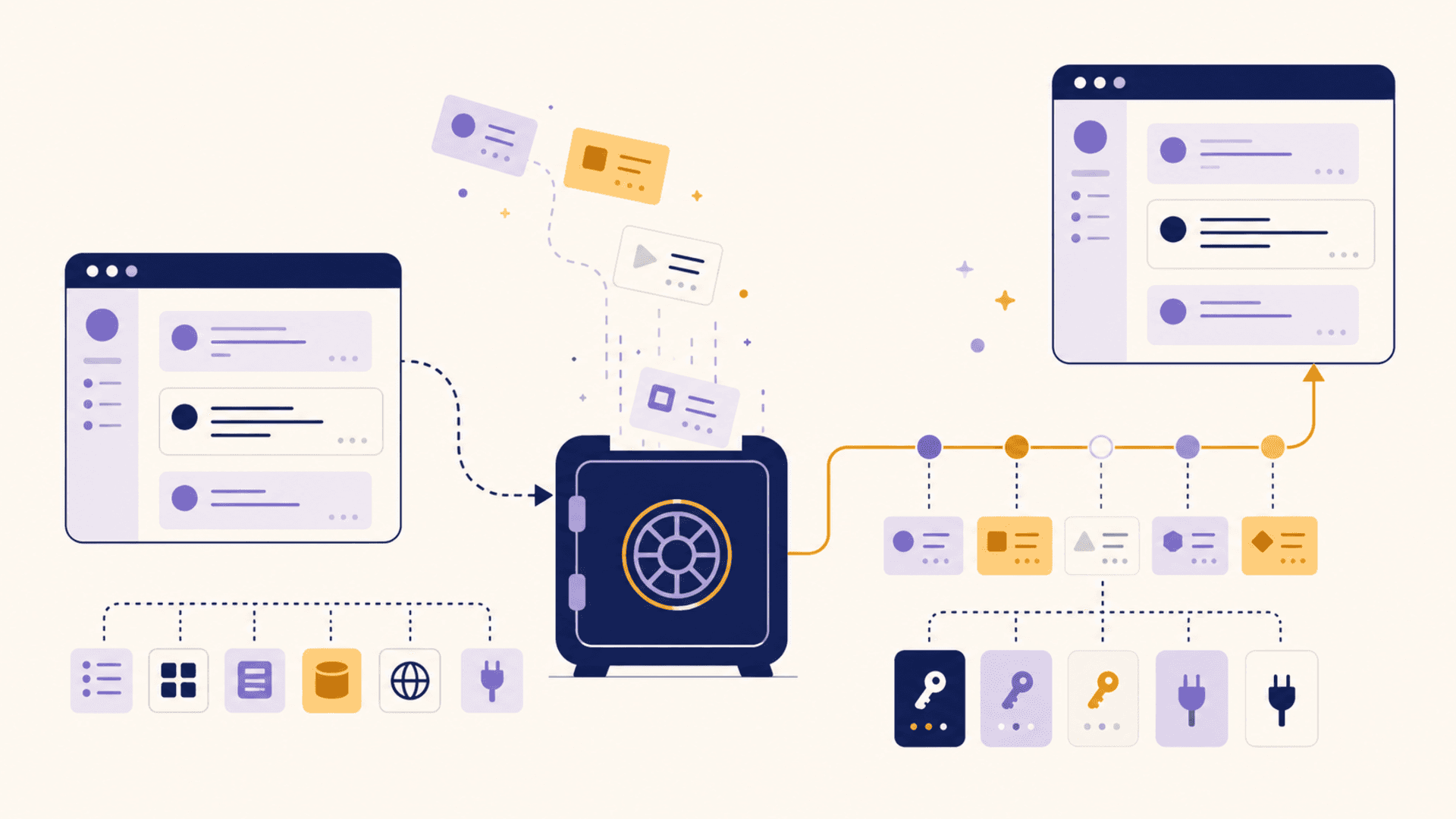
A months-long AI chat can start as useful continuity and end as contaminated context. The problem is not that the model forgot everything; it is that too much old material remains available in the wrong shape.
Long chats turn memory into residue
When users ask whether a long thread needs a purge, struggle to separate subjects in a vault graph, or build chat-history vaults after losing debugging threads, they are describing memory hygiene.
The signal is specific: The row combines contaminated ChatGPT context, chaotic Obsidian separation, and local chat-vault experiments after useful debugging context disappeared. This is not a request for another place to dump notes. It is a request for memory that can be captured quickly, reviewed later, and reused without polluting every future AI session.
 A memory dashboard gives users a place to review what should be reused instead of trusting a swollen chat thread.
The screenshot matters because memory products are otherwise easy to describe vaguely. A visible capture, graph, dashboard, or memory-read surface makes the promise inspectable: context was saved somewhere, came from a source, and can be reviewed before it is reused.
Source separation is the fix
The healthier pattern is to extract reusable context out of the chat. Decisions, source snippets, project facts, and unresolved questions should become reviewable objects rather than sediment inside one endless transcript.
The system has to meet the user before the material is polished. Notes, chat fragments, project decisions, and half-formed ideas should be easy to save first and organize after the useful context is no longer at risk of disappearing.
That timing is the whole product lesson. Memory that asks for perfect taxonomy up front will be bypassed during real work, while memory that accepts rough capture can improve the record once the user has breathing room.
Boundaries make memory trustworthy
Source separation matters because a note, a model guess, a user decision, and a project rule carry different authority. A memory layer should preserve those differences.
AI memory is more sensitive than ordinary note storage because it is designed to be reused. The user needs to know what was captured, where it came from, who can read it, and whether an assistant is allowed to write back into the vault.
Reuse is different from storage
Reusable context should be small enough to audit and clear enough to apply. When the user cannot tell why a fact is being reused, trust falls faster than recall improves.
A transcript archive can answer "what did I say?" A reusable memory layer should answer "what context helps this task now?" That requires summaries, source links, freshness, and small context packets instead of indiscriminate recall.
Maintenance is part of the product
The future of AI memory is not the longest possible conversation. It is the cleanest path from yesterday's useful context to today's task.
Memory that cannot be pruned becomes another inbox. The durable version is local, inspectable, and willing to treat forgetting as a feature when old context would make the next task worse.