
Jun 3, 2026
Prompt packs are proof — people already treat AI prompts as inventory worth keeping
When prompt packs sell as products, the market has revealed something quietly important: prompts are inventory, not throwaway chat text. The next move is treating that inventory like any other asset library — searchable, versioned, owned.
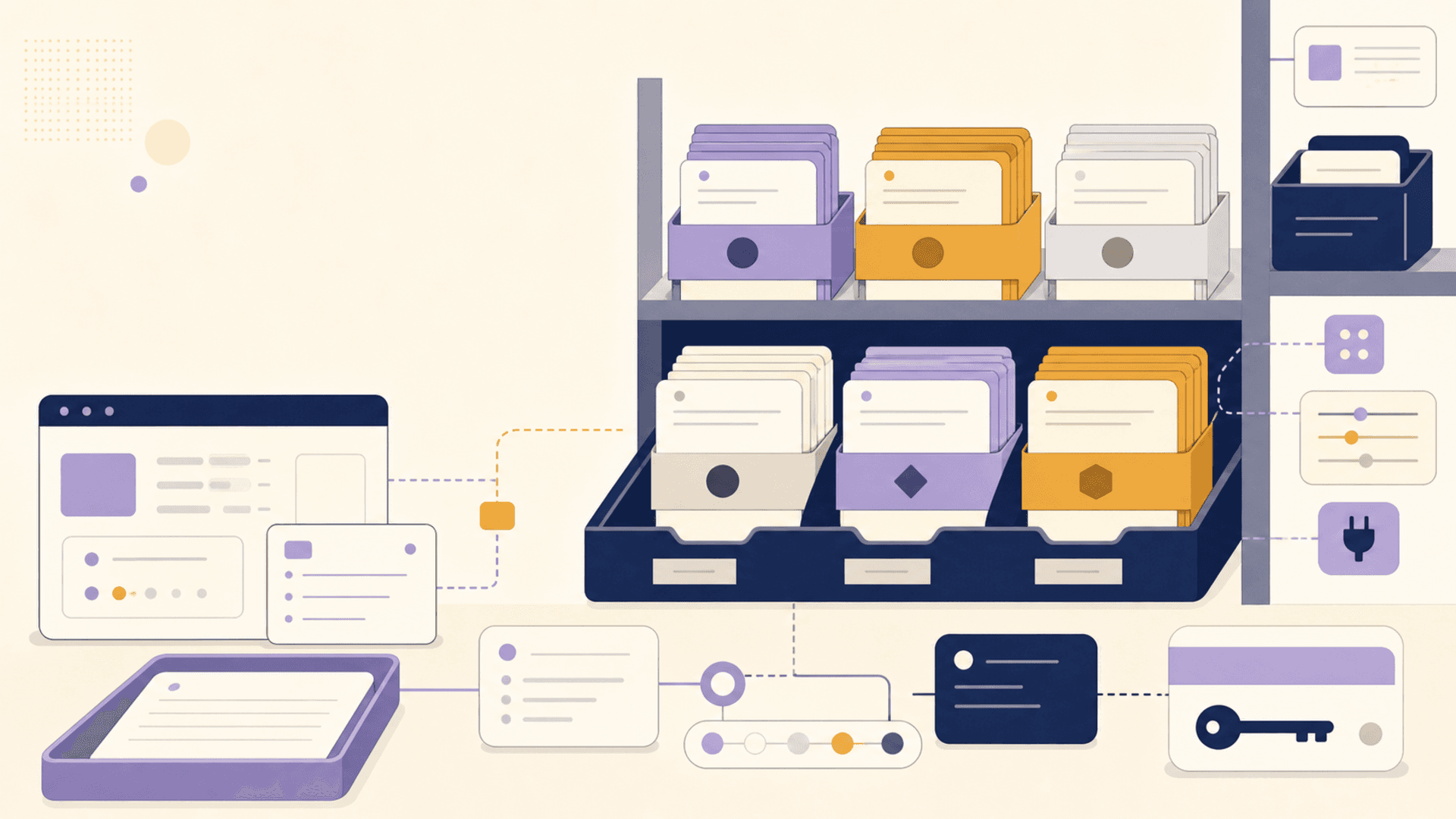
When a category produces a thing called a "pack" — sold, traded, downloaded — something has changed in how people think about the underlying unit.
Sticker packs. Music sample packs. Brush packs in design software. Each one started as casual ephemera and became a commodity once enough people decided the unit was worth keeping. A pack implies that the items inside are reusable, organized, and durable enough to be sold and owned.
Prompt packs are the same signal for AI. People are selling them. People are buying them. People are organizing them like libraries. That market behavior, more than any product launch, is the proof that prompts are not chat trash — they're inventory.
What hasn't caught up is the tooling.
The gap between the market and the tools
If you sell a prompt pack today, your buyer downloads a zip of markdown files. Their job is now to paste those prompts into whatever AI client they use, manage updates manually, and remember which prompt was which. The buyer paid for inventory, but the inventory delivery model is the same one you'd use for a single Word doc.
If you assemble a personal prompt library today, you do roughly the same thing in reverse. Prompts collect across your chat clients, your notes app, your starred messages, and a folder on your desktop. You know the inventory is real; you can't manage it like inventory because none of the tools treat it that way.
Meanwhile, the assets prove their value every time they're used. A good code-review prompt saves time on every PR. A good summarizer prompt cleans up every long meeting transcript. A good outline prompt cuts every long-form writing session in half. The ROI per prompt is so high that even mediocre inventory management leaves obvious wins on the table.
What "inventory" means once you take it seriously
A real inventory system has properties the current world is missing. Worth listing them out, because each one suggests a direction prompt tooling can go:
- Items have identities. A SKU, a name, a stable reference. You can talk about an item without having the body in front of you. Today's prompts don't have this; they're identified by the conversation they appeared in.
- Items have categories and tags. You can filter, group, and find without scrolling. Today's prompts mostly aren't tagged.
- Items have versions and revisions. You know which version is current. You can roll back. Today's prompts have whatever the last paste happened to be.
- Items have provenance. Where did this come from? Who authored it? What pack was it part of? Today's prompts mostly lose provenance the moment they're pasted.
- Items have usage records. Which prompts get used a lot? Which haven't been touched in months? Today this is invisible.
- Items have a home. A single place to browse and manage them. Today they're scattered.
Any one of these turned on for prompts changes how it feels to use AI day to day. All of them turned on at once changes what kind of work AI can do, because the inventory grows instead of churning.
What prompt creators want
If you're someone who builds prompt packs to share or sell, the inventory framing reshapes your product surface. You stop thinking about "a zip of files" and start thinking about "an asset library that's discoverable and updatable in the user's environment."
That lets a creator:
- ship updates that propagate automatically into customers' vaults,
- group prompts into recipes that customers can install as a set,
- measure which prompts in a pack actually get used,
- offer version notes ("v2 tightens the system prompt for newer models"),
- support translations or regional variants without confusing customers.
None of that is possible with the current download-and-paste model. All of it is normal if there is a vault sitting underneath.
What prompt buyers want
If you're someone who uses prompt packs (or just accumulates your own), the inventory framing reshapes how you store and reach for them.
It lets you:
- search every prompt you own from a single place,
- promote a prompt you wrote into a project scope, then a team scope,
- mix packs from different creators alongside your personal prompts without conflict,
- see what your AI assistant actually used last week,
- carry the whole library between clients and machines.
The difference is the same difference between "a folder of music files" and "a music library." The folder works. The library makes you a different kind of listener.
Why this changes positioning for vault products
If you're building a vault product, prompt packs are the most legible front door to the broader idea.
Memory-as-a-product is real but explaining it requires sentences. "AI forgetting," "continuity," "context across sessions" — important, but not fast. Prompt-management is the opposite. People already know what a prompt is. They already know they have prompts they want to keep. They already pay for prompt packs. "A vault for your prompts" is a sentence that lands in a single second.
From there, the vault expands into memory, snippets, recipes, and credentials. But prompts can be the hook. The hard part of vault adoption isn't features; it's getting the user to picture themselves using one. Prompts are the picture.
A practical move for vault builders
If you're building a vault and want to lean into the inventory framing, a few moves are higher leverage than the rest:
- First-class prompt entries. Not "a generic note that happens to contain a prompt." A typed prompt entry with template parameters, versions, and tags.
- Pack imports. Drag in a zip of markdown prompts, get a tagged collection with creator metadata intact.
- Recipe support. Let users group prompts into ordered sequences and run the sequence from any compatible client.
- Cross-client surfacing. Prompts in the vault should appear inside Claude Desktop, Cursor, Claude Code, and as many MCP-aware clients as possible — not as exports, as live presence.
- Usage records. Show which prompts are pulling weight and which aren't.
A vault that does these things well doesn't just compete with prompt managers — it competes with the chat-history feature inside every AI client, by being the place users prefer to keep prompts.
The summary
The market has already decided prompts are inventory worth selling. The tools are still treating them like throwaway chat text. The gap is real, and closing it is mostly a tooling problem rather than a market education problem. Build the vault; let prompt packs be the door people come in through.