
Jun 3, 2026
Memory debates across Claude sessions reveal the real need — visible control
The recurring debate about Claude's memory features is not really about memory. It's about visibility. Users don't object to AI remembering; they object to not being able to see what got remembered. A user-visible vault is both feature and trust narrative.
Every few weeks a Claude memory thread takes off on Reddit or X. Users describe an experience that surprised them — the model recalled something they didn't expect, or didn't recall something they thought it would, or referenced an old detail in a new conversation. The thread fills up. People share screenshots. Strong opinions arrive in equal numbers on both sides: "this is magical" and "this is creepy."
If you read enough of these threads, the underlying pattern becomes obvious. The disagreement isn't really about whether the model should remember. It's about whether the user can see what got remembered. The same memory event reads as magical when the user can audit it and as creepy when they can't.
That distinction is the whole product.
The two failure modes
Implicit memory features have two reliable failure modes. They are not symmetrical, and both erode trust.
Recall that surprises positively. The model remembers something useful — a project, a preference, a stack choice — that the user didn't explicitly save. The user is impressed at first, then unsettled. "What else does it know that I haven't been told?" Even the positive recall raises the audit question.
Recall that surprises negatively. The model remembers something the user wishes it hadn't — an old project they've moved on from, a customer they no longer work with, a preference they've changed. The user wants to fix it, can't find where, and ends up frustrated.
Both failure modes share the same root cause: the user has no clear surface for seeing the memory and shaping it. The fix is the same in both cases — make memory listable and editable, so the user can confirm "yes, I want this remembered" or remove the entry.
Most AI products are still on the wrong side of this. Memory is a background feature that users sometimes notice. The conversation that fixes it is the conversation that turns memory into a foreground surface.
What the threads are actually asking for
If you read the comments under those Reddit threads carefully, the asks repeat. Almost all of them are about control, not absence.
- "I want to see the list of what it knows about me."
- "I want to edit the entries that are wrong."
- "I want to scope this memory to one project."
- "I want to delete this memory permanently."
- "I want to know when it adds something new."
- "I want to export my memory if I move tools."
Notice what's not in the list: "I want memory turned off forever." A small fraction of users do say that, but the larger and more representative ask is "give me control over what's there."
That's a product brief, not a complaint. Users are telling builders what to ship.
What "visible control" actually looks like
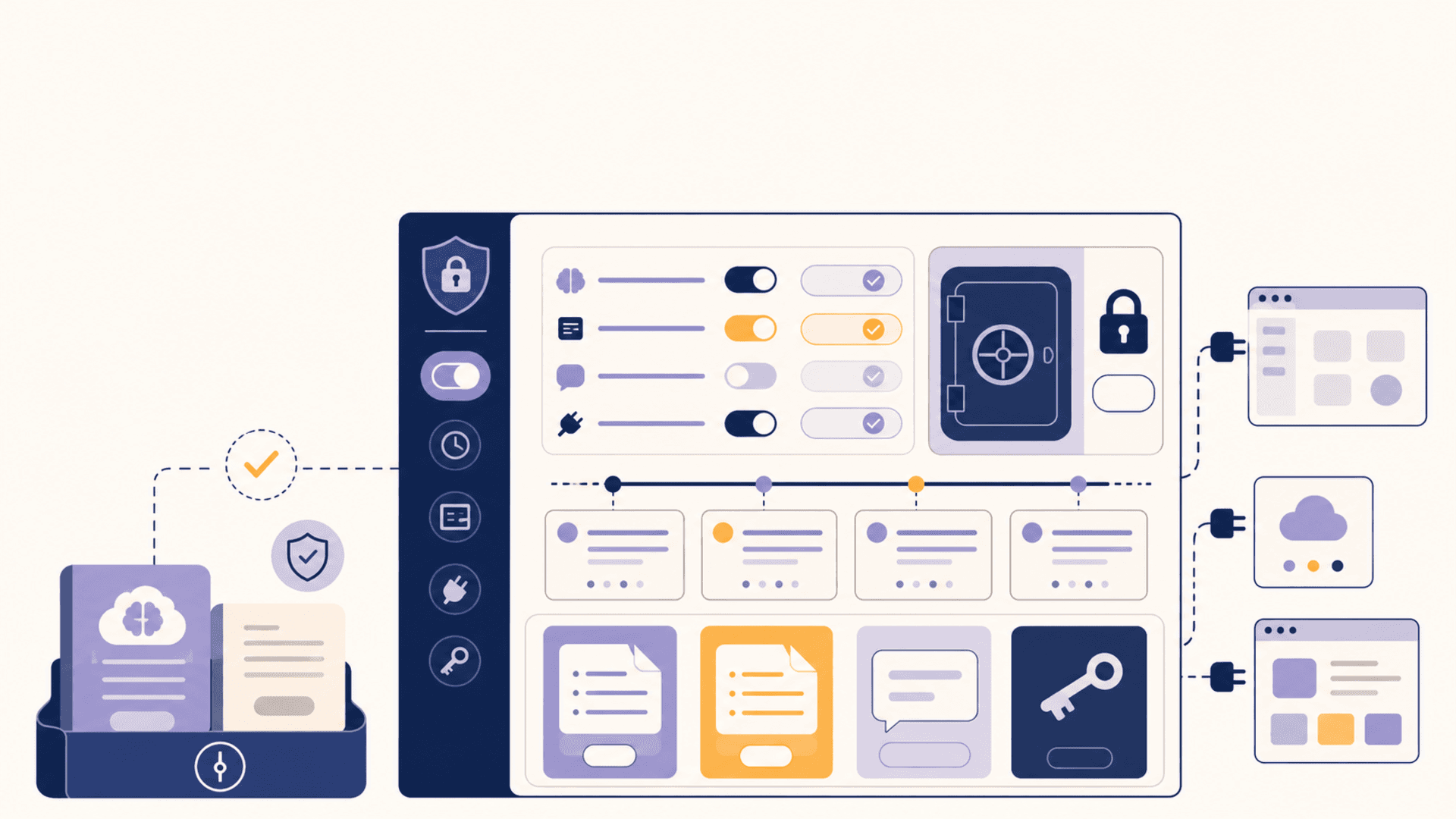
Visible control is a stack of small, concrete affordances that together turn implicit memory into something the user owns.
A list view. Every memory the system holds is visible in a single list, in plain language. "You prefer terse responses." "You're working on the Mercury project." "You use Postgres with Supabase." The user can scroll, search, and filter.
An edit surface. Each memory can be rewritten by the user. The model's interpretation isn't sacred; the user can correct it. "Actually I switched stacks last month" is a one-line edit.
Scopes. Each memory can be scoped — to a project, a customer, a session type. The same user can have multiple realities in the model without leakage between them.
Origin trails. Each memory shows where it came from. "Saved on 2025-02-12 from this conversation" or "imported from this document." The user can trace back.
Retrieval receipts. When the model uses a memory in a reply, the reply notes which memories were retrieved. The user can see what's actually being used vs what's sitting unused.
Delete and forget. Removal is real removal. The model behaves as if it never knew. The user has a guarantee of forgetting, not a pending request.
None of these are exotic engineering. The hard part is making them visible at the product level — first-class UI surfaces, not buried settings.
Why this fixes the trust problem
Users don't want to give up the benefits of memory. They get tired of repeating themselves. They want their assistant to remember their project, their stack, their preferences. The wish for memory is real and durable.
What users want is to be in charge. Memory that is opaque puts the user in a passive role: they receive the model's behavior without knowing where it comes from. Memory that is visible turns the user into a participant: they curate what's there, they understand why the model said what it said, they remove what no longer applies.
That shift — from receiver to participant — is the whole trust story. Once it's in place, the same memory features that read as creepy become valuable. The user knows what's there because they can see it. They know it will change when they tell it to. They know they can take it with them.
The product positioning this enables
A vault product that ships visible control as a first-class surface has a positioning advantage that is hard to compete with on features alone.
The competing story is "we have better memory." That story is hard to verify, hard to differentiate, and tied to model quality the vault doesn't control.
The visible-control story is "we show you what is remembered, you decide what stays." That story is verifiable in fifteen seconds. The user opens the vault, sees their memories, edits one, and the story is proven.
Product positions that prove themselves in fifteen seconds tend to be the ones that win in markets where users are still figuring out which substrate to trust.
What to ship if you're building this
If you are building a memory-aware AI product, the minimum useful step is the list view. Not a settings page that says "memory is on." A real list of every memory the system holds about the user, in human language, sortable, searchable, editable.
From there, the next steps are:
- Origin trails. Each memory shows where it came from.
- Scopes. The same user can run multiple memory contexts without leakage.
- Retrieval receipts. When the model uses memories, the reply discloses which ones.
- Delete-and-forget. The user can permanently remove memories with a guarantee.
- Export. The user can take everything with them.
Each of these steps strengthens trust. Each is small in isolation; together they make memory feel like a feature rather than a surveillance system.
What to do if you're a user worried about memory
For users navigating the current landscape, a short evaluation checklist for any AI tool that uses memory:
- Can you see the full list of what's stored?
- Can you edit or delete entries?
- Can you scope memory to a project or session?
- Does the tool show you when memory is being used in a reply?
- Can you export memory if you move tools?
A tool that says yes to all of these has earned your investment. A tool that says no to two or three is asking you to trust on faith, which is a fragile basis for the years of accumulated context a memory feature is supposed to hold.
The short version
The Claude memory debates aren't about memory; they're about visibility. Users are telling builders what to ship — list views, scopes, edit surfaces, retrieval receipts, export. A vault that turns memory into a first-class, visible, user-shaped surface earns trust the implicit-memory model can't. That trust is both the feature and the moat.